(adsbygoogle = window.adsbygoogle || []).push({});

Dangal vs Toxic: 5 Shocking Ways Indian Cinema Has Changed

Dangal vs Toxic β€” comparing Indian cinema's shift from sports drama to anti-hero spectacle

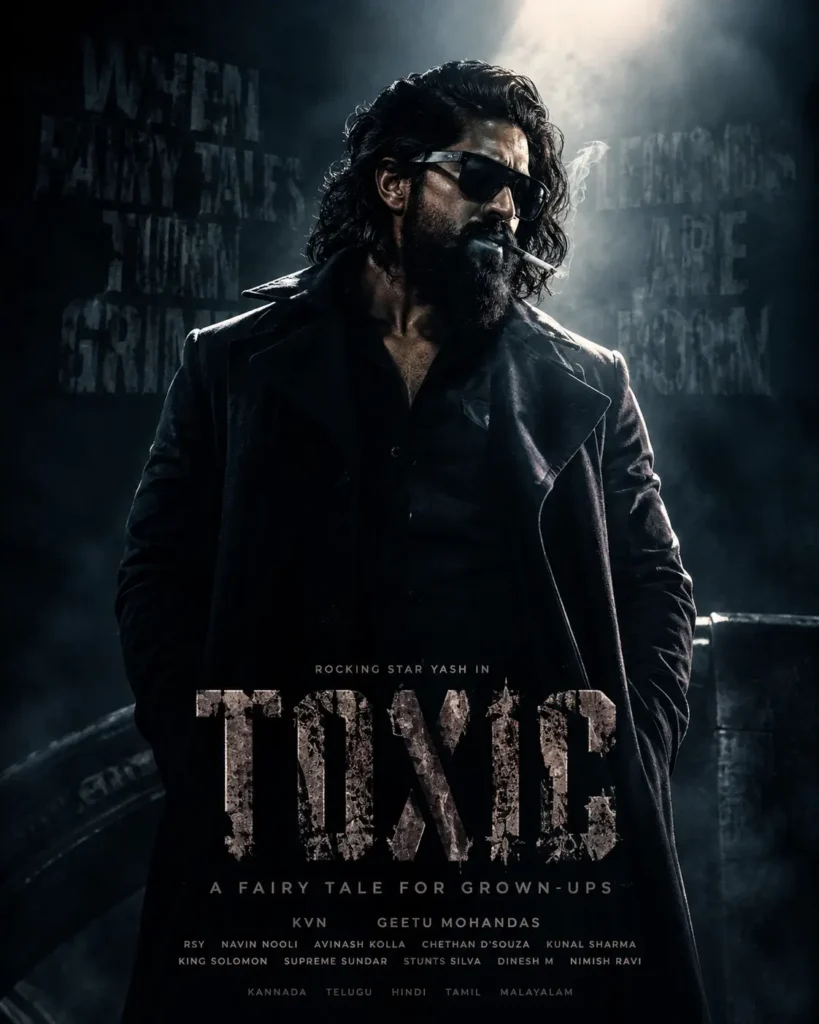
Dangal vs Toxic is the comparison Indian cinema didn’t know it needed until this month. One is a 2016 sports drama built on discipline and sacrifice. The other isΒ Yash’s 2026 gangster epic, Toxic: A Fairy Tale for Grown-Ups, built on chaos, inherited violence, and raw magnetism. Put side by side, Dangal vs Toxic isn’t just a genre comparison β€” it’s a snapshot of how audience psychology has shifted in a single decade.

This article breaks down that shift across narrative design, masculinity, cultural impact, and commercial logic β€” and explains why the market is pivoting so hard toward grittier storytelling.

Table of Contents

  1. Why This Comparison Matters Right Now
  2. Narrative Architecture: Structure vs Subversion
  3. Masculinity: Mentor vs Anti-Hero
  4. Cultural & Commercial Impact Matrix
  5. The Evolutionary Verdict

Why This Comparison Matters Right Now {#why-it-matters}

This debate isn’t hypothetical. Toxic released worldwide on August 26, 2026, and according to early trade reports, it opened with advance bookings crossing β‚Ή45 crore β€” a scale Dangal never had to chase, because it built its audience through word-of-mouth trust rather than pre-release spectacle.

That contrast is the entire story. Dangal asked audiences to believe in merit. Toxic asks them to feel the pull of power that owes nothing to the system. Understanding both as two parallel commercial models β€” not a hierarchy β€” is the key to reading where Indian cinema is headed next.

Narrative Architecture: Structure vs Subversion {#narrative-architecture}

Dangal‘s narrative architecture is almost classically structured. It follows a closed, reward-based arc: obstacle, sacrifice, setback, triumph.

Mahavir Phogat’s promise to his daughters is made explicit early and fulfilled precisely at the end. The wrestling mat becomes a stage for societal reform, where a skeptical village’s resistance is dismantled scene by scene through demonstrated competence.

Every humiliation Geeta and

Babita endure is narrative collateral the script cashes in during the final bout. This is triumph-as-contract β€” the audience knows structurally that virtue will be rewarded.

Toxic, by contrast, runs on subversion rather than fulfillment. Where Dangal asks “will merit be recognized by a resistant world?”, the Toxic archetype asks “what does a man become when the world offers no fair contract at all?”

Reports describe Toxic centering on a father-son conflict β€” Yash playing both Raya and his estranged son, set against a smuggling underworld in a “bygone era” Goa (per Wikipedia’s production summary). That’s a narrative engine built on inherited violence and moral inheritance, not linear reward.

This is the anti-hero archetype in its purest commercial form. Characters don’t rise within the system β€” they carve their own system out of its wreckage. Aestheticized violence becomes the genre’s actual grammar, not an occasional punctuation mark.

Masculinity: Mentor vs Anti-Hero {#masculinity}

Mahavir Singh Phogat is a demanding mentor, but a constructive one. His authoritarianism is instrumental β€” harsh, sometimes uncomfortable, but always in service of a legible, socially sanctioned goal.

His arc has an internal check, too. The f

ilm forces him to confront the limits of his control during the Nationals sequence, where Geeta must succeed without him in her ear. It’s masculinity in service of someone else’s ascent.

The modern “Toxic protagonist” inverts that. This is chaotic, often self-destructive magnetism β€” power accumulated not to protect a legible social unit, but to answer trauma with domination.

Where Phogat’s authority is validate

d by a verifiable outcome, the Toxic-archetype hero’s authority is often self-referential β€” powerful because the camera, score, and slow-motion frame rate insist he is.

Casting Yash as both the father-figure and the rebelling son is a telling structural choice. It stages a fight between the industry’s inherited masculine ideal and its more volatile successor, inside a single actor’s body.

Cultural & Commerci

al Impact Matrix {#impact-matrix}

VectorDangal ParadigmToxic Paradigm
Core Emotional DriverEarned triumph through discipline and sacrificeCatharsis through identification with unchecked power
Cinematic PaletteGrounded, naturalistic, muted rural tonesStylized, high-contrast, period-noir textures
Target DemographicMulti-generational, family-unit viewingYounger, urban, spectacle-driven audiences
Global Box Office AppealBroad crossover via universal underdog narrativeScale-driven via pan-Indian star vehicles
Primary Societal CritiquePatriarchal gatekeeping and gender expectationSystemic failure and the myth of clean power

(For context on the film’s scale, see our related coverage of pan-Indian cinema’s box office boom and how budgets like Toxic’s reported β‚Ή600–800 crore production cost compare across the industry.)

The Evolutionary Ver

dict {#verdict}

The market’s pivot toward grittier, anti-hero-d

riven cinema isn’t a rejection of Dangal‘s values β€” it’s fatigue with its promise.

Merit-driven triumph narratives ask audiences to believe a flawed system can eventually be persuaded to reward virtue. A decade of pan-Indian cinema built on the KGF/Pushpa/Animal template β€” now scaling further with Toxic‘s reported nine-figure budget β€” suggests a large audience segment finds more emotional honesty in narratives where the system is bypassed rather than reformed.

That said, this isn’t a fight to the death for the industry’s soul. The two paradigms run as parallel commercial ecosystems, each with distinct box-office logic and audience expectations.

Dangal-style cinema hasn’t disappeared. It still

commands festive-season family audiences and remains reliable for mid-budget crossover hits. What’s changed is the ceiling β€” the anti-hero template has proven it can scale to the biggest budgets and widest simultaneous multi-language releases the industry has attempted.

The likeliest future isn’t extinction of one mode by the other,

but a widening split: grounded storytelling retreating toward smaller, prestige-adjacent releases and streaming, while theatrical tentpoles chase stylized, morally destabilized spectacle. Whoever finally proves Dangal vs Toxic storytelling don’t have to be mutually exclusive may make the industry’s next truly transformative hit.


From the Akhara to the Underworld: How Indian Cinema Traded Discipline for Danger

Executive Summary

Dangal built its emotional architecture on sweat, discipline, and a father’s belief that merit could rewrite a daughter’s destiny; the Toxic era builds its architecture on charisma, chaos, and the seductive idea that the rules were never worth following in the first place. What sits between these two commercial titans β€” one a 2016 sports drama that became India’s highest-grossing film of its time, the other Yash’s 2026 gangster epic Toxic: A Fairy Tale for Grown-Ups, releasing this very week off the back of the KGF wave β€” is not just a shift in genre, but a diagnosis of what contemporary audiences now want from their heroes: less reform, more rebellion.

This is not a story of one film being “better” than the other. It is a story of two entirely different business models for emotional catharsis, and what the pivot between them says about the psychology of the modern Indian moviegoer.

Architectural Contrast: Theme & Narrative Design

Dangal‘s narrative architecture is almost classically Aristotelian. It follows a closed, reward-based structure: obstacle, sacrifice, setback, triumph. Mahavir Phogat’s arc and his daughters’ arcs are built on a promise made explicit early and fulfilled precisely at the end β€” the wrestling mat as a stage for societal reform, where a patriarchal village’s skepticism is dismantled scene by scene through demonstrated competence. The film’s emotional resonance comes fromΒ Β earned payoff. Every humiliation Geeta and Babita endure β€” the taunts, the exhaustion, the cropped hair β€” is narrative collateral that the script cashes in during the final bout. This is triumph-as-contract: the audience knows, structurally, that virtue will be rewarded, and the pleasure lies in watching that contract honored with craft.

Toxic cinema, by contrast, operates on subversion rather than fulfillment. Where Dangal asks “will merit be recognized by a resistant world?”, the Toxic archetype asks “what does a man become when the world offers him no fair contract at all?” Early reports on Toxic itself describe a father-and-son conflict β€” Yash playing both Raya and his estranged son Ticket β€” set against a smuggling underworld in a “bygone era” Goa. That’s a narrative engine built not on linear reward but on inherited violence, moral inheritance, and cyclical reckoning. This is the anti-hero archetype in its purest commercial form: characters who don’t rise within the system, they carve their own system out of its wreckage. Aestheticized violence β€” balletic, operatic, often shot with the reverence usually reserved for religious iconography β€” becomes the genre’s actual grammar, not an occasional punctuation mark. Where Dangal resolves tension through victory, Toxic-style films frequently resolve it through cinematic subversion: the audience’s moral compass is deliberately destabilized so that catharsis comes from spectacle and identification rather than resolution.

Character Construction & Masculinity

Mahavir Singh Phogat is a demanding mentor, but a constructive one. His authoritarianism is framed by the film as instrumental β€” harsh, sometimes uncomfortably so, but always in service of a legible, socially sanctioned goal. His masculinity is protective and didactic; he absorbs the village’s ridicule so his daughters don’t have to carry it alone. Crucially, his arc has an internal check: the film forces him to confront the limits of his control (the Nationals sequence, where Geeta must succeed without him in her ear) as proof that real mentorship ends in the mentee’s independence. It’s masculinity in service of someone else’s ascent.

The modern “Toxic protagonist” β€” and Yash’s filmography going back through Rocky Bhai in KGF is the clearest template for this β€” inverts that entirely. This is chaotic, often self-destructive magnetism: power accumulated not to protect a legible social unit but to answer trauma with domination. Where Phogat’s authority is validated by an external, verifiable outcome (Olympic medals, a changed village), the Toxic-archetype hero’s authority is often self-referential β€” he is powerful because the camera, the score, and the slow-motion frame rate insist he is. Reports on Toxic describe Yash playing both the father-figure and the son who stands opposed to him, which is a fascinating structural choice: the genre is literally staging a fight between its own inherited masculine ideal and its more volatile successor, inside a single actor’s body. That’s not incidental β€” it’s the industry dramatizing its own transition on screen.

This raw magnetism trades legibility for intensity. Audiences aren’t asked to endorse the anti-hero’s choices; they’re asked to feel the pull of them, the same way pulp fiction and noir have always monetized moral ambiguity. It’s a masculinity of appetite rather than obligation.

Cultural & Commercial Impact Matrix

VectorDangal ParadigmToxic Paradigm
Core Emotional DriverEarned triumph through discipline and sacrificeCatharsis through identification with unchecked power
Cinematic PaletteGrounded, naturalistic, muted rural tonesStylized, high-contrast, period-noir and neo-gothic textures
Target DemographicMulti-generational, family-unit viewingYounger, urban, spectacle-driven male-skewing viewership
Global Box Office AppealBroad crossover via universal underdog narrativeScale-driven via pan-Indian star vehicles and franchise mythology
Primary Societal CritiquePatriarchal gatekeeping and gender expectationSystemic failure, inherited violence, and the myth of clean power

The Evolutionary Verdict

The market’s pivot toward grittier, anti-hero-driven cinema isn’t a rejection of Dangal‘s values so much as an admission of fatigue with its promise. Merit-driven triumph narratives ask audiences to believe the system, however flawed, can eventually be persuaded to reward virtue. A decade of pan-Indian cinema built on the KGF/Pushpa/Animal commercial template β€” and now scaling further with reported budgets north of β‚Ή600 crore for a single film like Toxic β€” suggests a sizable audience segment finds more emotional honesty, or at least more visceral release, in narratives where the system is simply bypassed rather than reformed. Aestheticized violence and moral subversion have become genuinely bankable precisely because they externalize a frustration that “work hard and the world will notice you” narratives increasingly struggle to satisfy for a generation navigating uncertain economic and social mobility.

That said, the two paradigms aren’t in a fight to the death for the industry’s soul; they’re running as parallel commercial ecosystems, each with distinct box-office logic, marketing playbooks, and audience covenants. Dangal-style cinema hasn’t disappeared β€” it still commands festive-season family audiences and continues to be a reliable genre for mid-budget crossover hits. What’s changed is the ceiling. The anti-hero, hyper-stylized template has proven it can scale to the biggest budgets and the widest simultaneous multi-language, multi-territory releases the industry has ever attempted β€” which is its own kind of commercial argument.

The likeliest future isn’t the extinction of one mode by the other, but a widening bifurcation: grounded, reform-minded storytelling retreating toward smaller, prestige-adjacent releases and streaming, while theatrical tentpoles increasingly chase the stylized, morally destabilized spectacle that reliably pulls audiences back into cinemas. Balanced storytelling β€” a film that wants both the discipline of Dangal‘s narrative architecture and the raw charge of Toxic‘s anti-hero energy β€” remains the hardest needle to thread, and the industry’s next genuinely transformative hit may well be whichever filmmaker finally proves the two aren’t mutually exclusive.

Leave a Comment