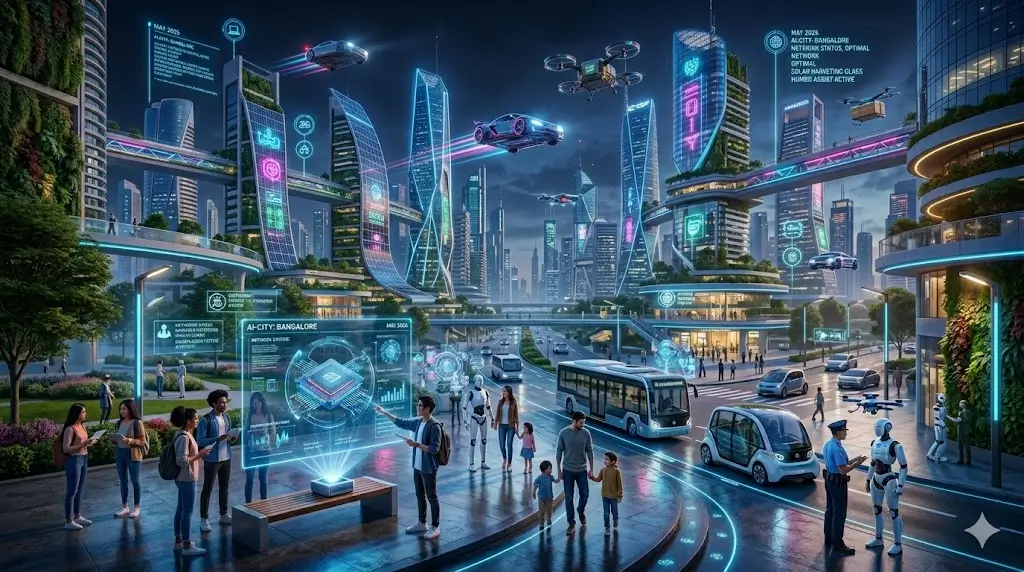
10 Future Technologies That Will Change the World by 2030 || AI Revolution
Technology is evolving faster than ever before. Every year, new inventions are transforming the way people live, work, communicate, and travel. Experts believe that by 2030, the world will look completely different because of advanced technologies powered by Artificial Intelligence, robotics, automation, and smart systems.
From self-driving cars to AI-powered healthcare, future technologies are expected to make life easier, faster, and more connected. Many of these innovations are already being tested today and could soon become a normal part of everyday life.
In this article, we will explore the top future technologies that are expected to change the world by 2030.
1. Artificial Intelligence Everywhere AI Revolution
Artificial Intelligence (AI) is one of the biggest technological revolutions in human history. AI systems are becoming smarter and more powerful every year.
Today, AI is used in smartphones, chatbots, hospitals, businesses, and social media platforms. By 2030, AI could become part of nearly every industry.
AI may help doctors diagnose diseases faster, improve education through smart tutors, automate businesses, and even power advanced robots. AI assistants could become more human-like and capable of understanding emotions and conversations naturally.
Many experts believe AI will become as important as electricity or the internet in the future.
2. Self-Driving Cars
Autonomous vehicles are another major future technology trend. Companies like Tesla, Google, and several automobile manufacturers are investing heavily in self-driving car technology.
These vehicles use cameras, sensors, radar systems, and AI software to drive without human control.
Self-driving cars could reduce accidents, improve traffic management, and save travel time. In the future, smart transportation systems may allow vehicles to communicate with each other for safer roads.
Although fully autonomous cars are still developing, experts predict they will become common in many countries by 2030.
3. Smart Cities
Future cities are expected to become smarter through technology and automation.
Smart cities use sensors, AI, and internet-connected systems to improve public services such as transportation, electricity, waste management, and security.
Traffic lights may automatically adjust based on traffic conditions. Smart energy systems could reduce electricity waste. AI-powered surveillance systems may improve public safety.
Countries around the world are already investing in smart city projects to improve urban life and sustainability.
4. Quantum Computing
Quantum computing is considered one of the most advanced future technologies.
Unlike traditional computers, quantum computers can solve extremely complex problems much faster. This technology may revolutionize industries such as medicine, cybersecurity, scientific research, and finance.
Scientists believe quantum computing could help discover new medicines, improve weather prediction, and solve problems that are impossible for current computers.
Although quantum computers are still in early development, they could become highly important by the next decade.
5. Advanced Robotics
Robots are becoming more intelligent and capable every year.
In the future, robots may assist humans in factories, hospitals, restaurants, homes, and even space missions. Humanoid robots powered by AI could perform tasks such as customer support, elderly care, and dangerous industrial work.
Robotics technology may also improve disaster rescue operations and medical surgeries.
Many companies are currently developing robots that can walk, speak, and interact naturally with people.
6. Virtual Reality and Augmented Reality
Virtual Reality (VR) and Augmented Reality (AR) technologies are expected to transform entertainment, education, gaming, and business.
VR creates completely digital environments, while AR adds digital elements to the real world.
In the future, students may attend virtual classrooms using VR headsets. Businesses may conduct virtual meetings in digital office spaces. Gamers could experience highly realistic virtual worlds.
AR glasses and VR devices are becoming more advanced and affordable every year.
7. Space Technology and Tourism
Space exploration is growing rapidly with companies like SpaceX, Blue Origin, and NASA developing advanced spacecraft technologies.
Future space missions may focus on Mars exploration, lunar bases, and even commercial space tourism.
Experts predict that wealthy travelers could soon visit space hotels or experience short space trips. Space technology may also improve satellite communication and global internet services.
Humanity’s future in space could become one of the biggest technological achievements of the century.
8. Smart Healthcare Technology
Healthcare technology is improving through AI, wearable devices, and remote medical systems.
Smart watches can already track heart rate, sleep patterns, and oxygen levels. Future healthcare systems may use AI to detect diseases early and provide personalized treatments.
Robotic surgeries, AI medical assistants, and remote healthcare services may become more common in the coming years.
Technology could make healthcare faster, more accurate, and more accessible for people worldwide.
9. Green Energy Innovations
Climate change is encouraging countries to invest in clean and renewable energy technologies.
Solar power, wind energy, electric vehicles, and hydrogen fuel systems are expected to grow rapidly by 2030.
Scientists are also developing better battery technologies for storing renewable energy efficiently.
Green technology may reduce pollution, protect the environment, and create a more sustainable future for the planet.
10. Internet of Things (IoT)
The Internet of Things connects devices through the internet to create smart environments.
Future homes may include smart refrigerators, smart lighting systems, AI security cameras, and voice-controlled appliances.
IoT technology can improve convenience, energy efficiency, and automation in homes and businesses.
Experts predict billions of connected smart devices will exist worldwide by 2030.
Final Thoughts
The future of technology looks exciting and powerful. Innovations such as Artificial Intelligence, smart cities, robotics, and quantum computing are expected to reshape the world in ways never seen before. AI Revolution
While these technologies bring many opportunities, they also create challenges related to privacy, cybersecurity, and employment. Learning about future technology trends will become increasingly important for students, businesses, and professionals.
The next decade may become one of the most advanced technological periods in human history. People who adapt and learn these technologies early could benefit the most in the future.