wellness trends 2026
Health & Wellness
The Great Wellness Reset: Why 2026 Is the Year We Stopped Optimising and Started Living
From biohacking burnout to the rise of “neurowellness,” the global health conversation is undergoing a profound shift — and experts say it could not have come sooner.
For years, wellness culture ran on a single, exhausting premise: optimise everything. Track your sleep, count your macros, cold-plunge at 5 a.m., biohack your cortisol. But as 2026 unfolds, a powerful counter-movement is rewriting the rules — and this time, the message is surprisingly simple: stop performing, start feeling.
The Burnout of BiohackingThe backlash has been building quietly for several years. Now, it is breaking into mainstream discourse with force. Consumers, wellness professionals, and even the technology companies that built the quantified-self industry are acknowledging an uncomfortable truth: relentless self-monitoring can make people sicker, not healthier.
According to researchers at the Global Wellness Summit — whose annual trends report is considered the most authoritative forecast in the $6.8-trillion global wellness economy — 2026 marks a decisive turning point. The prevailing mood, they argue, is one of recalibration: a collective decision to prioritise how we feel over what our wearables tell us we should feel.
What the data shows: Wellness industry analysts report that constant health surveillance — tracking biomarkers, optimising every meal and sleep cycle — is ironically increasing stress and anxiety among consumers, undermining the very goals it was designed to support.
Social media feeds that once celebrated elaborate morning routines and performance-enhancing gadgets are now filling with a very different kind of content: people sharing their exhaustion with hustle-wellness culture, questioning whether the pursuit of peak performance is genuinely conducive to well-being.
The Four Trends Defining 2026
🧠 Neurowellness
The breakout trend of the year. Using technology to actively regulate the nervous system — through biofeedback, breathwork, and somatic practices — rather than simply pushing performance harder.
♀️ Women’s Longevity
A long-overdue correction: the $1-trillion longevity market has historically been built around male biology. In 2026, clinics, wearables, and telehealth platforms are finally pivoting to address women’s distinct health trajectories.
😴 Sleep as Medicine
Sleep has graduated from a lifestyle tip to a primary health metric. Tracking hormonal rhythms, body temperature, and sleep stages — not just hours — is now mainstream.
🌍 Ready Is the New Well
Post-pandemic and amid rising global instability, the newest wellness imperative is resilience preparedness: having a disaster plan is becoming as essential as having a fitness plan.
Neurowellness: The Science Behind the BuzzwordOf all the trends gaining traction in 2026, neurowellness has attracted the most attention — and the most scrutiny. Defined broadly as the use of technology to deliberately regulate the nervous system, it encompasses everything from portable EEG headbands and heart-rate variability (HRV) monitors to guided breathwork apps and somatic therapy.
The core insight driving the movement is deceptively straightforward: modern, digitally saturated life keeps most people’s nervous systems locked in a chronic state of low-grade stress. The result is not dramatic — it rarely manifests as a breakdown — but over months and years, this persistent activation erodes sleep quality, immune function, and emotional resilience.
“Historically, we assessed nervous system dysregulation through symptoms: anxiety, insomnia, irritability, burnout. Now, we are quantifying it physiologically and neurologically — it is no longer a guessing game.”
— Dr. Desiree R. Eakin, MD, Integrative Medicine Specialist
Critics, however, urge caution. Many consumer-grade neurowellness devices have entered the market faster than the clinical research required to validate them. Rigorous, large-scale trials remain scarce. For the average person, experts recommend a middle path: use HRV monitoring or guided meditation tools as supplements to established healthy habits, not as replacements for sleep, movement, and nutrition.
Women’s Health Gets Its Own LanePerhaps the most consequential shift in 2026’s wellness landscape is structural: the formal acknowledgement that women’s health has long been under-researched and under-served.
For decades, longevity medicine extrapolated findings from studies conducted predominantly on men and applied them broadly to women. The emerging scientific consensus challenges this approach directly, with mounting evidence that women age fundamentally differently — particularly in how ovarian function influences systemic health across multiple organ systems.
The market is responding. Telehealth platforms, diagnostic companies, and wellness resorts are redesigning services around female biology. The focus is shifting from managing menopause symptoms reactively to addressing ovarian aging proactively — and to providing interventions tailored to women at every stage of life, not just midlife.
The Microplastics Wake-Up CallAmong the more sobering developments gaining mainstream attention in 2026 is the escalating concern over microplastics as a human health issue. Unlike the “detox” wellness fads of previous years — many of which lacked credible scientific grounding — the emerging body of research on microplastics is being taken seriously by public health authorities.
Microplastic particles have now been detected throughout the human body, including in blood, lung tissue, and the placenta. Researchers are actively investigating potential links to inflammation, hormonal disruption, and cardiovascular risk. In 2026, the wellness industry is beginning to shift its messaging from awareness to practical action — including guidance on reducing dietary and environmental exposure.
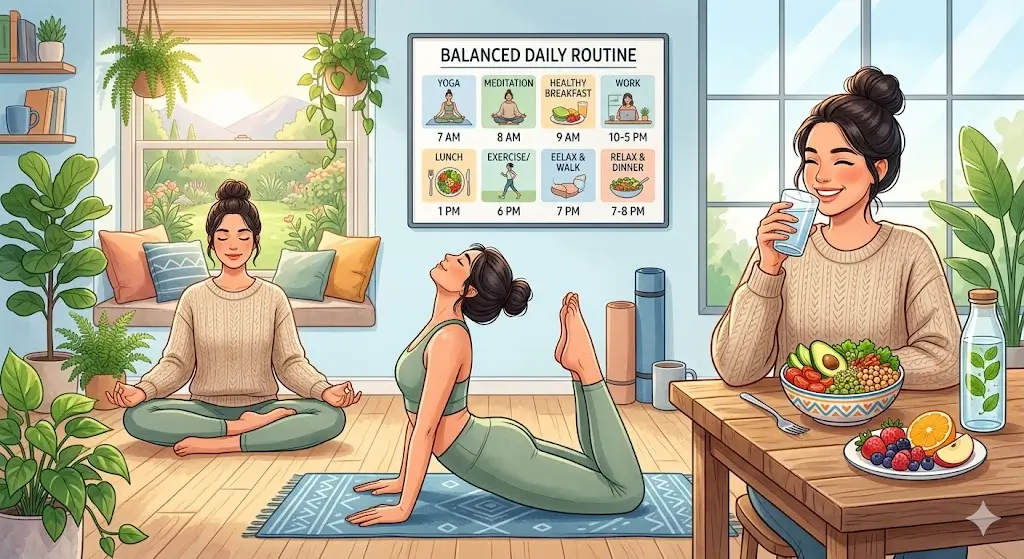
What This Means for YouThe overarching message from health experts and wellness researchers in 2026 is one that requires no expensive gadget or subscription to implement. The most evidence-supported path to long-term well-being remains, as it always has, grounded in fundamentals: consistent sleep, movement that feels sustainable, social connection, and a diet built around whole foods.
What is changing is the cultural framing around these basics. The exhausting performance-wellness narrative — in which health is something to be achieved and demonstrated — is giving way to something quieter and considerably more durable: wellness as a lived experience, measured not by biometric scores, but by how fully present and alive one feels in everyday life.
Bottom Line: The biggest health shift of 2026 is not a new supplement or a wearable device. It is a change in mindset — from optimisation to regulation, from measurement to meaning, from performance to presence. And according to the science, that shift is long overdue.